Table of Contents
For many U.S. workers, the paycheck looks better on paper this year. Base salaries have inched higher, and annual raises are showing up across W-2 income statements. On the surface, it appears earnings are finally catching up with inflation.
But the experience of receiving that paycheck tells a different story. Consider a hypothetical worker earning $72,000 last year who now earns $76,000. The expectation is simple: a larger paycheck should mean more room each month. Yet when the direct deposit hits, the increase feels muted — in some cases, almost unchanged.
The difference isn’t in gross pay. It’s in what happens before the money reaches the bank account.
The Gap Between Gross Pay and Take-Home Pay Is Widening
In earlier cycles, a raise had a clearer impact. A 4% or 5% salary increase showed up, more or less proportionally, in monthly take-home pay. That relationship has become less predictable.
Between 2022 and 2025, several layers of deductions expanded at the same time. Federal withholding adjustments — particularly after temporary pandemic-era tax positioning — normalized. Employer-sponsored benefit costs rose, especially health insurance. According to KFF’s 2025 Employer Health Benefits Survey, average family premiums for employer-sponsored coverage climbed 6 percent in 2025 to reach $26,993 a year — the third straight year of increases at that pace or higher. For illustration, a hypothetical employee contributing $220 per paycheck toward health insurance in 2021 could reasonably be contributing $310–$340 for a similar plan today, with deductibles shifting upward as well.
Local tax structures add another layer. In certain states and municipalities, incremental adjustments — through rate changes or expanded taxable categories — have slightly increased withholding amounts. These are rarely headline changes, but they accumulate.
This isn’t isolated to a few employers or industries. According to the Bureau of Labor Statistics’ Employment Cost Index, benefit costs for private industry workers have consistently grown faster than wages and salaries in recent quarterly reports. It’s a small gap on paper each time, but it means a growing share of every compensation dollar is going toward benefits rather than take-home pay — a pattern that has persisted rather than narrowed across recent cycles.
Why Withholding, Benefits, and Local Taxes Are Expanding Together
The mechanics behind this shift aren’t accidental. Employers typically adjust salaries annually, but benefits pricing runs on a different cycle — health insurance costs, in particular, get recalibrated based on claims data and healthcare inflation, and these adjustments can outpace wage growth in any given year.
At the same time, tax withholding is designed to approximate annual liability in real time. As incomes rise, even modestly, workers can move into slightly higher effective withholding ranges, especially when combined with reduced credits or phased-out deductions.
This creates a layering effect: wages increase incrementally, benefit costs adjust based on external pricing pressures, and tax withholding recalibrates to updated income levels. Each layer operates independently, but the outcome converges in one place — the net paycheck. To illustrate the scale: a hypothetical worker who sees a $300 monthly increase in gross pay might, after accounting for higher benefit contributions, adjusted withholding, and retirement deductions, see the actual increase in take-home pay land closer to $120–$160.
How Workers Actually Experience the Shift
The change is rarely noticed all at once. It often begins with a sense that raises feel smaller than expected — a promotion or annual adjustment doesn’t translate into the anticipated flexibility. Monthly budgets remain tight even as income technically rises, and that mismatch is genuinely disorienting for someone who did everything “right” and still feels stuck.
Over time, workers begin to notice patterns. Paychecks vary slightly more than before, especially after benefit enrollment periods. January deductions look different from mid-year ones, and part of that variability traces back to payroll mechanics themselves — a dynamic examined more closely in how salary billing cycles create gaps that feel like income plateaus. Some employees revisit their pay stubs more closely, noticing line items that previously went unquestioned. Others only recognize the shift when comparing year-over-year bank balances or tax refunds.
There’s also a behavioral adjustment. Instead of treating raises as available income, many households begin to treat them as partially pre-allocated — absorbed by systems before they can be used. The psychological impact is subtle but persistent: income growth feels less tangible. It’s not always obvious where the increase went, only that it didn’t stay.
A System-Level Shift in How Income Is Delivered
This pattern reflects a broader structural change in compensation design. In earlier decades, a larger share of compensation was delivered directly as wages. Today, a significant share of employer spending on workers is embedded in non-wage components — healthcare, retirement matching, and insurance coverage all contribute to total compensation, but none of it appears in take-home pay.
Regulatory and tax frameworks compound this. Withholding mechanisms are designed to reduce year-end tax imbalances, but they also smooth out income in ways that can obscure changes. The result: total compensation may be increasing, gross wages may be rising modestly, but net, usable income grows more slowly. The distinction between earning more and feeling financially ahead becomes more pronounced.
This isn’t limited to a single income bracket or region. Across urban and suburban areas, similar patterns are emerging, and the dynamic connects to a broader pattern of household cost pressure — where price increases in housing, insurance, and everyday expenses often happen through structural adjustments rather than visible one-time jumps, a squeeze compounded further by why annual raises no longer cover rising living costs for W-2 workers.
What This Means in Practice
- Compare your pay stub’s gross-to-net ratio year over year, not just the raise percentage. A 5% raise paired with a 6% jump in benefit deductions isn’t actually a 5% increase in take-home pay.
- Review health insurance elections every open enrollment period, not just when something changes. Premium creep happens even on plans you haven’t actively modified.
- Check your W-4 withholding annually, especially after a raise or major life change. Over-withholding means an interest-free loan to the IRS; under-withholding risks a surprise bill.
- Separate “total compensation” from “usable income” when evaluating a raise or job offer. Employer contributions to retirement and insurance matter, but they don’t cover this month’s rent.
- If retirement contributions auto-escalate, check the schedule at least once a year. A 1% annual increase is easy to miss until it’s compounded across several raises.
Frequently Asked Questions
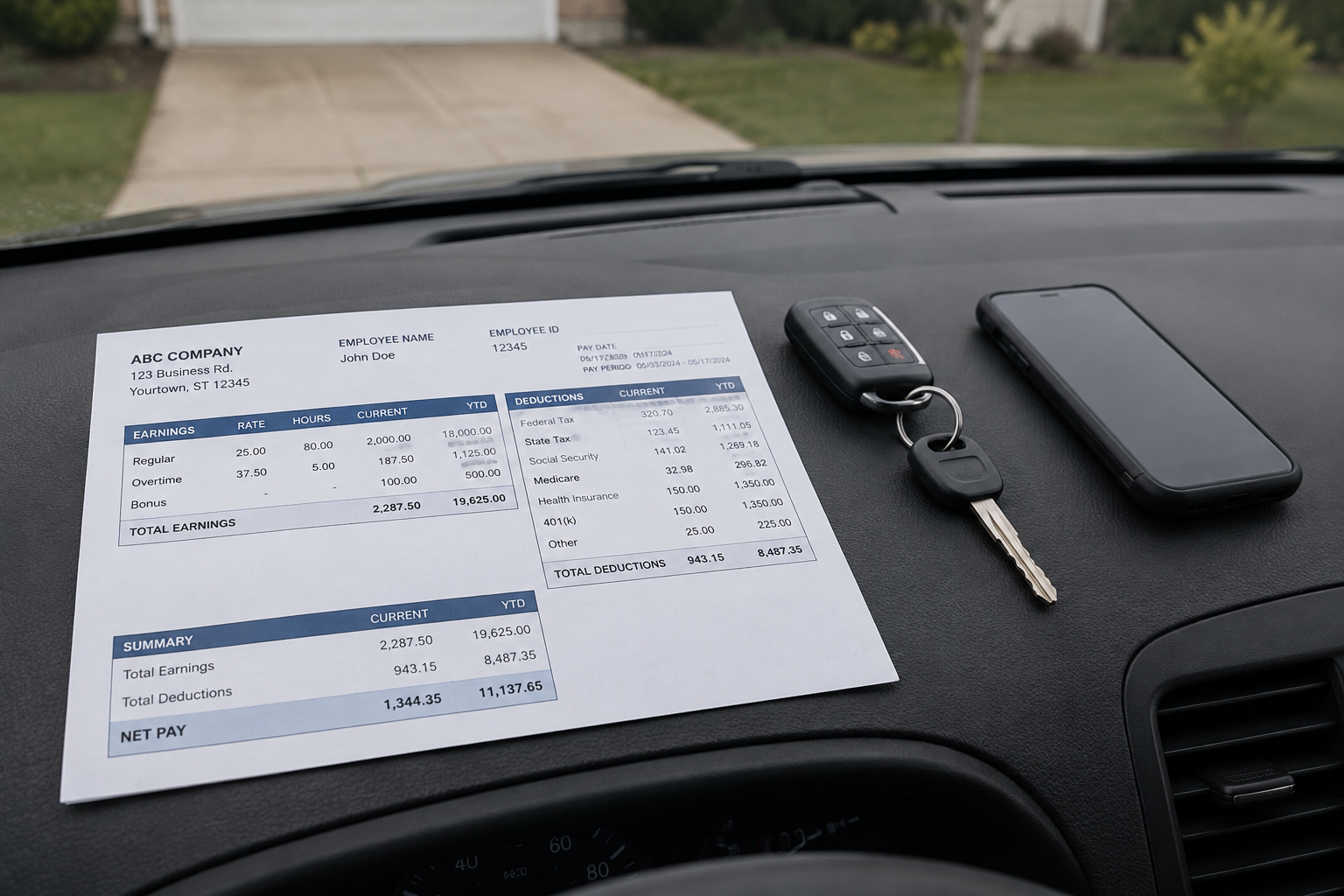
Q: What should someone do if their raise doesn’t seem to show up in take-home pay? A: Pull the most recent pay stub and compare each deduction line — federal withholding, state and local tax, health insurance, retirement — against the same period last year. The gap is almost always visible once isolated by category rather than judged from the total.
Q: When does this gap between gross and net pay matter most? A: Right after a raise, a promotion, or open enrollment, when multiple deductions often shift at once. Reviewing pay stubs during these windows catches changes before they compound unnoticed.
Q: Why does the U.S. tax and benefits system make this so hard to track? A: Withholding tables, payroll tax brackets, and employer benefit pricing all operate on different schedules and formulas. None of them are designed to give a worker a single, clear view of how a raise translates into actual take-home pay
Q: Is it a misconception that a bigger raise always means more financial flexibility? A: Yes. Total compensation can rise while usable income grows much more slowly, because a larger share of every raise increasingly gets absorbed by taxes, benefit costs, and retirement contributions before it reaches a checking account.
About the Author Wealth Power Editorial Team covers U.S. personal finance, household income behavior, and consumer financial trends, drawing on Federal Reserve publications, IRS data, Bureau of Labor Statistics reports, and other public financial research.
Disclaimer: This article is for informational and educational purposes only and does not constitute financial, tax, or legal advice. Individual financial situations vary. Readers should consult a qualified financial, tax, or legal professional before making any financial decisions.