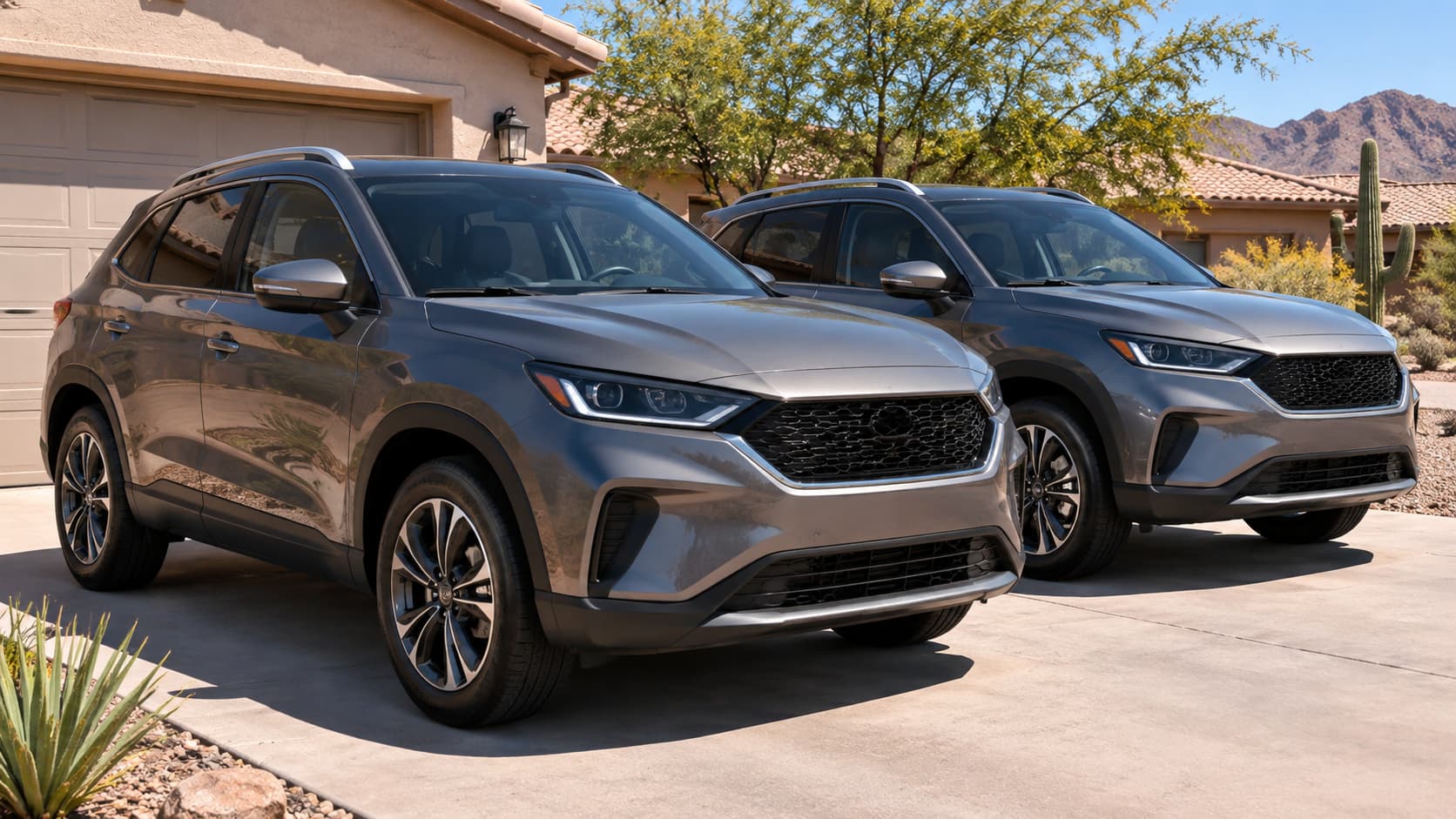
A car insurance premium increase of 32 percent can land on a policy with no claim, and nothing about the driver has to change for it to happen.
Consider a hypothetical Arizona driver with a clean record whose six-month premium moves from $1,150 to $1,520 at renewal, for the same 2019 Honda CR-V and the same coverage. What changed was the insurer’s cost data and the date its new rates took effect, and both arrive together in a single notice.
Table of Contents
Why a Renewal Notice Can Jump Without a Claim
Insurance pricing resets in chunks. Month by month, the insurer absorbs changes in claim costs, repair inflation and regional risk without touching your price. At renewal the whole backlog gets applied at once, and the new price then stays fixed for the length of the term unless the policy itself changes, for example through an added driver, a new vehicle or a different coverage level.
That makes a renewal notice a lagging signal. A premium set in March reflects costs the insurer absorbed in the months before March, including a repair-cost spike from last year that the market may have left behind since.
Rates are also regulated state by state. The National Association of Insurance Commissioners told Congress in 2020 that every state except Illinois runs a rate approval process, either prior approval, where new rates wait for sign-off, or file-and-use, where an insurer files and then starts charging. A few states use a use-and-file variant. Your state’s version decides how soon an increase can reach you, and a new rate plan then arrives as policies come up for renewal.
Homeowners policies can move between renewals as well, as change in the middle of a policy term shows.
The Bureau of Labor Statistics tracks what households pay through the motor vehicle insurance index in the Consumer Price Index, covering collision, comprehensive, liability and related coverage on private passenger vehicles. The index follows premiums on a sample of policies, and in December 2025 it carried a weight of 2.75 percent in the overall CPI.
Over the 12 months through September 2026 the index fell 5.0 percent, according to the September CPI table. An individual renewal can still land higher, because each swing reaches a driver only when that driver’s own policy comes up.
For how other everyday categories moved over the same 12 months, see the September price data by category.
How Two Identical Drivers Pay Different Premiums
Return to the Arizona driver. The insurer’s approved increase took effect on March 1, the day this driver’s policy renewed, and the full 32 percent arrived in one notice. A neighbor with the same car, the same record and the same insurer renewed on January 1, two months before the effective date. That neighbor keeps paying $1,150 per six months until July, when the same increase lands.
For six months the neighbor pays $370 less for identical coverage, and neither driver did anything different. The gap closes in July. A rate increase can look personal when it is really a matter of the calendar.
What Drives a Car Insurance Premium Increase Beyond Your Record
Insurers price with factors that correlate with expected loss, according to the same NAIC testimony, and a driver’s own history is one of them. Four system-level adjustments do most of the remaining work:
- Repair cost inflation. Modern vehicles are expensive to fix. Sensors, cameras and advanced materials make even a minor accident cost more, and insurers price in projected repair costs for each model year.
- Regional risk recalibration. State regulators can pull ZIP-code data on average premium, claim frequency and claim severity, the NAIC reported, and insurers price against the same local pattern. If theft, accidents or litigation costs rose near you, your profile moved with them.
- Reinsurance costs. Insurers carry insurance of their own, called reinsurance, and its price rises after large-scale losses such as hurricanes or wildfires. Some of that higher price can reach policyholders, a pattern covered in how reinsurance costs reach homeowners’ renewal notices.
- Claim severity. Accident counts can level off while the cost per claim keeps climbing, and insurers commonly cite rising claim severity when they file rate increases.
A driver’s record can stay perfect while those four move, and at renewal the combined estimate is what gets billed. Many drivers expect a clean record to mean no increase, skip the policy review and miss the quote that would have turned up there.
Five Moves Before the Next Notice
Line the new declarations page up against the old one first. Check the vehicle list, the named drivers, the limits, the deductibles and the discounts, because a changed field there explains an increase faster than any market trend does. Then work through five moves:
- Compare quotes before the new term starts. Renewal notices arrive ahead of the new term, leaving a window to collect quotes from other insurers. Match coverage limits and deductibles exactly, because a cheaper quote with lower limits is a different product.
- Test small coverage changes. Raising a deductible, reviewing collision coverage on an older vehicle or bundling home and auto can soften a sudden increase. Weigh each change against what you could pay out of pocket after a loss.
- Ask which factors changed. Request the rating factors that moved, whether any discount lapsed and which rate filing applied to your renewal date. If that filing shows an average increase of 12 percent and your notice shows 32 percent, as in this hypothetical, the gap points to factors specific to your policy rather than the market.
- Budget for a jump. Premiums arrive in steps and feel sudden for that reason. A monthly cushion set aside before the notice makes a step easier to absorb.
- Mark the next renewal date. Put the date on a calendar now and request quotes a few weeks ahead. A large increase this year does not predict next year’s cycle.
What a No-Claim Increase Tells You
A no-claim increase tells you when the insurer’s costs reached your policy. The weeks before the next renewal are the time to compare quotes and ask which factors changed.
FAQ
How should I compare a six-month premium with an annual one?
Put both on the same term length before judging them. The Arizona driver’s $1,520 for six months works out to $3,040 over a year only if the price holds, and the next term can be repriced again.
What does a declarations page show?
It is the summary at the front of the policy. It lists the insured vehicles, the named drivers, the coverages, the limits, the deductibles and the premium, which is why it is the first document to compare when a renewal notice arrives.
Can my credit score raise my premium at renewal?
In many states insurers may use a credit-based insurance score as one rating input. The NAIC said in 2020 that almost every state bars it from being the sole or primary basis for a rate change or nonrenewal, and that some states prohibit credit scores in this pricing altogether.
Who can I ask if I think a rate increase is wrong?
Start with the insurer in writing and ask for the rating factors behind the change. Your state’s department of insurance takes consumer questions and can tell you what the insurer filed.
About the Author
Wealth Power is edited by Dilip Kumar Bharati. Articles on U.S. personal finance are researched and drafted with AI assistance using public sources such as IRS data, Bureau of Labor Statistics reports and Federal Reserve publications, and are reviewed and edited by him before publication.
Disclaimer: This article is for informational and educational purposes only and does not constitute financial, tax, or legal advice. Individual financial situations vary. Readers should consult a qualified financial, tax, or legal professional before making any financial decisions.