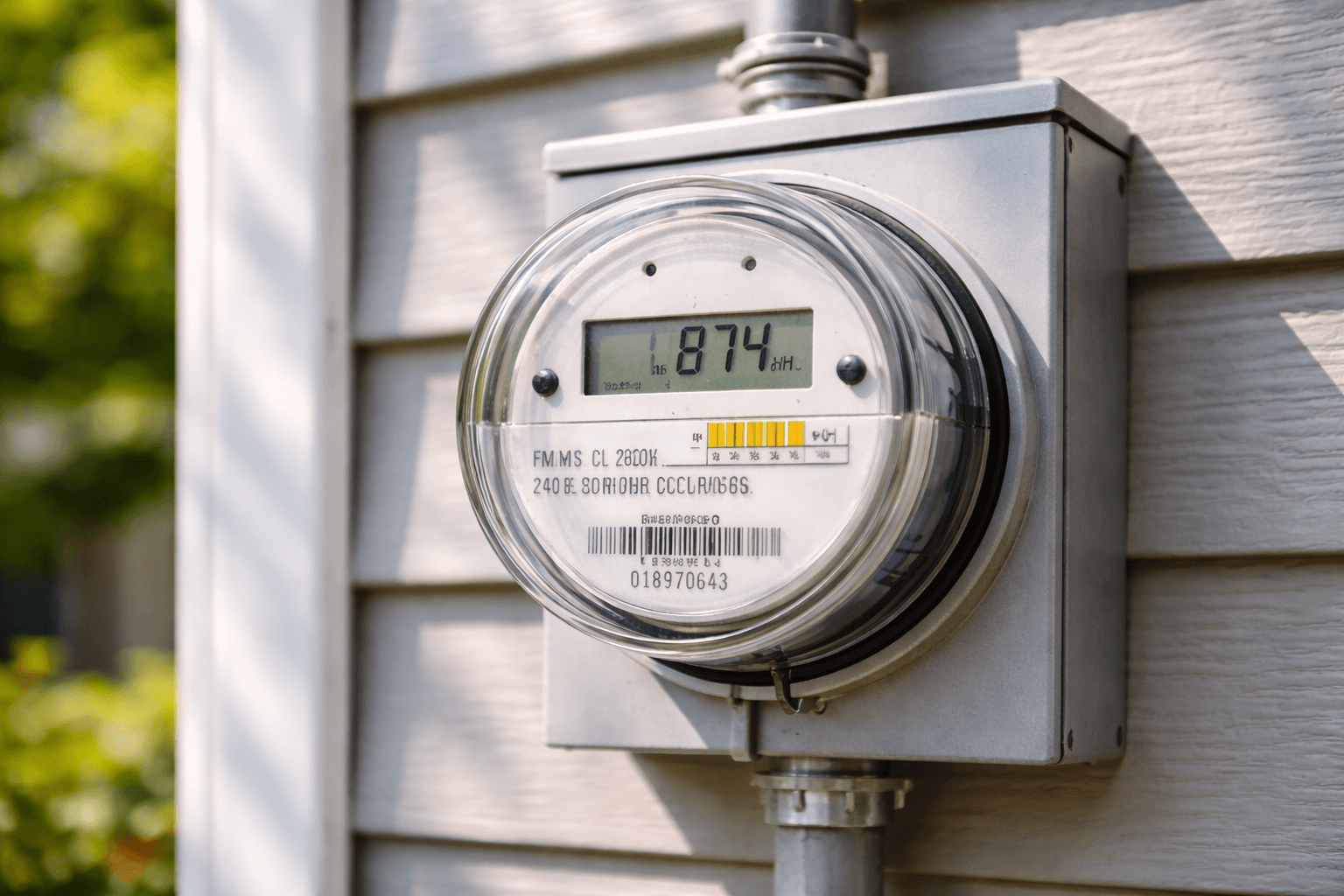
The amount hasn’t stayed consistent. One month the electricity bill comes in at $140, the next it climbs past $210 without any clear change in usage. The pattern doesn’t follow a simple seasonal curve anymore—it feels uneven, shifting from month to month.
Utility bills are becoming less predictable for U.S. households year over year, even when consumption habits remain relatively stable. What used to be a manageable, expected expense now moves in ways that are harder to anticipate.
Over the past 12–24 months, these fluctuations have become more noticeable. Heating, cooling, water, and electricity costs are no longer following familiar patterns, making monthly budgeting less stable.
This reflects how essential utility costs are gradually becoming less stable within everyday U.S. household finances.
This reflects a broader pattern where fixed living costs are gradually turning into variable financial pressures across U.S. households.
Why Utility Bills No Longer Follow Predictable Patterns in the U.S.
Utility pricing is influenced by multiple moving factors—energy markets, infrastructure costs, regulatory changes, and regional demand patterns.
When fuel costs increase, utility providers often adjust rates to reflect higher production expenses. These adjustments don’t always happen evenly. Instead, they may appear in sudden rate changes or seasonal spikes.
At the same time, extreme weather patterns have started to affect energy usage more directly. Longer summers, unexpected cold snaps, and fluctuating demand can shift consumption in ways that don’t match previous years.
This often means that even similar usage levels can produce different billing outcomes depending on when and how energy is consumed.
That variability is what households are beginning to notice.
The Role of Rate Adjustments and Hidden Cost Layers
Utility bills are not based solely on usage.
They include multiple components—base charges, delivery fees, fuel surcharges, infrastructure costs, and regulatory adjustments. Over time, these components have expanded.
A household may reduce electricity usage slightly, but still see a higher bill due to increased service fees or updated rate structures.
Between 2022 and 2025, several U.S. regions saw incremental rate increases tied to grid upgrades, renewable energy transitions, and maintenance costs. These increases are often distributed across billing cycles rather than applied all at once.
This often means the total bill changes even when behavior stays relatively consistent.
This broader cost pressure is also visible in Property Tax Increases Are Quietly Raising U.S. Housing Costs, where non-mortgage expenses continue expanding alongside everyday utility costs.
What’s Driving Utility Bill Changes Beyond Household Control
Much of the variability in utility bills doesn’t come from household behavior alone. It is shaped by external systems that operate outside day-to-day consumption patterns.
Energy markets play a significant role. When fuel costs shift—whether due to supply constraints, global demand changes, or regional production issues—those changes often move through utility pricing structures with a delay. This creates situations where current bills reflect past market conditions rather than present ones.
Weather patterns have also become less predictable. Extended heat waves or unexpected cold periods can increase demand across entire regions at the same time, placing pressure on supply systems. In response, utilities may adjust pricing or apply temporary cost mechanisms that affect billing cycles unevenly.
There is also the impact of infrastructure investment. Over the past 2–3 years, many utility providers across the U.S. have expanded spending on grid reliability, maintenance, and energy transition projects. These costs are typically distributed across rate structures over time, rather than appearing as a single, visible increase.
At the same time, regulatory adjustments at the state or local level can influence how and when these costs are passed through to households. These changes don’t always align with usage patterns, which adds another layer of unpredictability.
This often means that utility bills reflect a combination of past cost shifts, system-wide demand, and long-term infrastructure changes—many of which operate independently of individual household behavior.
Weather Variability and Consumption Shifts
Utility costs are closely tied to weather patterns.
In the past, seasonal usage followed a predictable rhythm—higher electricity bills in summer, increased heating costs in winter. But over the last few years, that rhythm has become less consistent.
Unexpected heat waves in early spring or extended warm periods into late fall can increase cooling costs outside traditional peak months.
Similarly, sudden cold periods can drive heating usage higher without warning.
Over a 12-month period, this creates uneven spikes rather than a smooth cycle.
The Shift From Fixed to Variable Expense Behavior
Utilities were once considered semi-fixed expenses—relatively stable and easy to estimate month to month.
That assumption is changing.
Fluctuating rates, layered pricing structures, and unpredictable usage patterns are turning utilities into variable expenses.
This often means households can no longer rely on past bills to estimate future costs with the same level of confidence.
This pattern also shows up in When Lifestyle Expansion Becomes Permanent, where rising everyday costs gradually become embedded into household spending.
The Impact of Infrastructure and Grid Investment
Utility providers across the U.S. are investing heavily in infrastructure upgrades—modernizing power grids, improving resilience, and transitioning toward renewable energy sources.
These investments are typically recovered through rate adjustments over time.
Instead of one large increase, costs are spread across billing cycles, creating gradual but persistent changes in monthly bills.
For many households, this shows up as incremental increases that are difficult to attribute to a single cause.
Over time, these adjustments contribute to a steady expansion of utility costs.
— Wealth Power Editorial Desk
How Billing Cycles and Timing Add Complexity
Utility bills don’t always align neatly with calendar months.
Billing cycles can vary by a few days each period, which can slightly change the number of usage days included in each bill.
For example, a billing cycle that extends from 28 days to 33 days can increase the total amount due, even if daily usage remains the same.
This creates small but noticeable variations that add to the sense of unpredictability.
Why Utility Bills Feel Harder to Control
Unlike discretionary spending, utility usage has limits to how much it can be reduced.
Households still need heating, cooling, water, and electricity regardless of price changes.
Even when efforts are made to lower consumption—adjusting thermostats, reducing usage hours—the overall bill may not decline significantly due to rising base rates and fixed charges.
This often means that control over the final bill is more limited than it appears.
A related shift can be seen in When Stability Absorbs Every Raise, where income increases are gradually absorbed by rising baseline expenses.
The Gradual Normalization of Unpredictable Costs
One of the more subtle changes is how quickly households begin to adapt to variability.
A bill that feels unusually high one month may feel less surprising the next, even if it remains elevated. Over time, fluctuating costs become part of the expected pattern rather than an exception.
This often means unpredictability itself becomes normalized.
There is also a behavioral shift.
Instead of expecting a stable monthly number, households begin to anticipate variation. Budgeting becomes less about fixed estimates and more about managing ranges.
Over a 12–18 month period, this changes how utility expenses are perceived—not as a steady cost, but as a moving one.
The Layering Effect Across Monthly Expenses
Utility bills don’t exist in isolation.
They move alongside other cost-of-living pressures—housing, insurance, groceries, and transportation.
Even moderate increases across each category can combine to create a larger shift in overall monthly expenses.
Over a 24-month period, small increases across multiple categories often result in a noticeable change in financial flexibility.
For many households, this creates a broader sense of instability—not because of one major expense, but because several smaller ones are changing at the same time.
The Gap Between Expectation and Reality
Many households still approach utility bills with the expectation of stability.
That expectation is based on years of relatively predictable patterns.
But current billing behavior reflects a different structure—one shaped by variable pricing, shifting demand, and layered cost components.
This creates a gap between what households expect and what they experience.
The Ongoing Nature of Utility Cost Variability
Utility bills are unlikely to return to fully predictable patterns.
As energy markets evolve, infrastructure investments continue, and climate patterns shift, variability becomes part of the system.
Some months may feel manageable, while others bring unexpected increases.
For many U.S. households, this creates a new baseline—not of higher costs alone, but of less predictable ones.
Leave a Reply