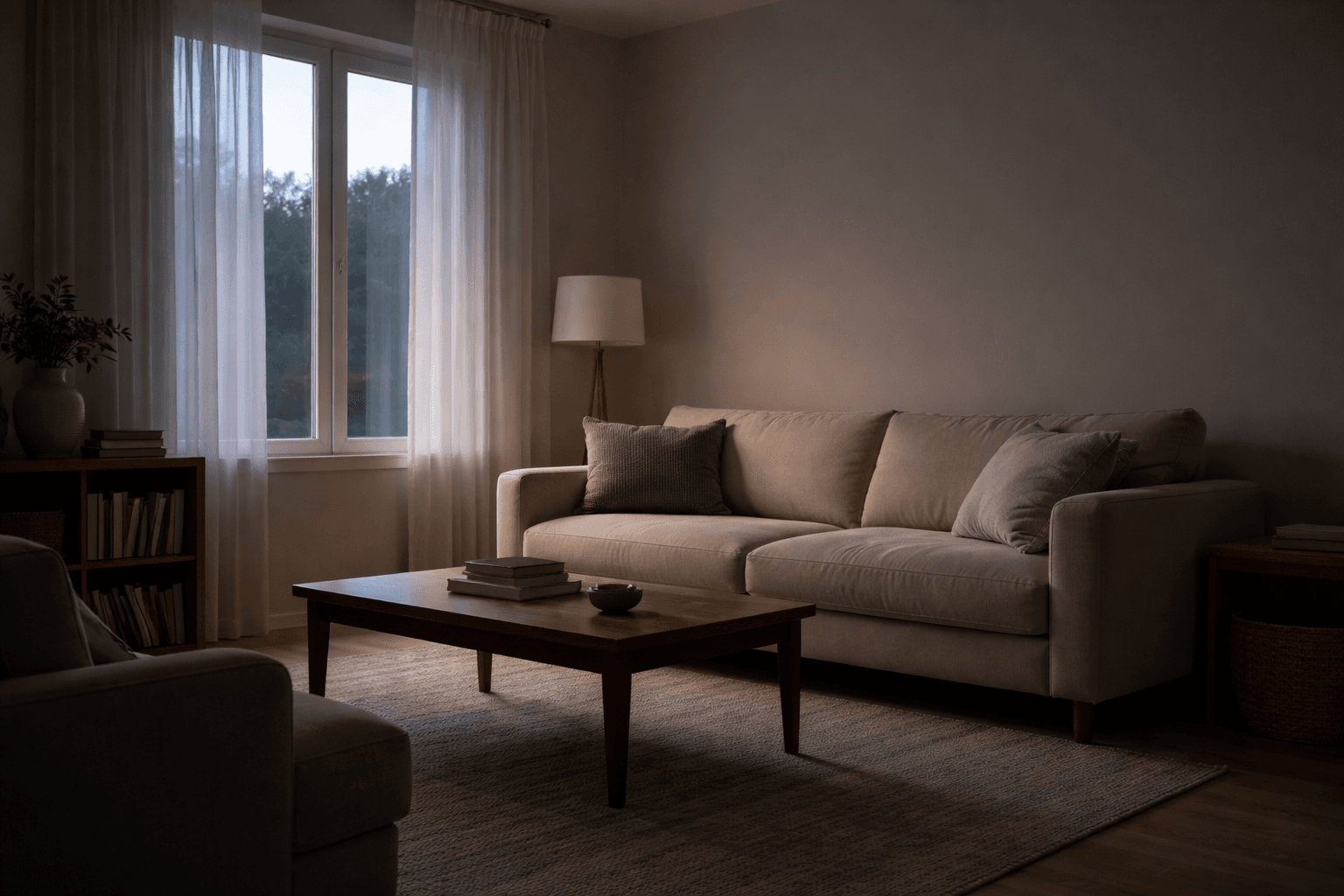
By the time the house finally felt finished, the year had already slipped by.
The last box had been flattened and pushed into the garage weeks earlier, but the space still carried a provisional feeling. Furniture sat where it had landed rather than where it belonged. The walls were painted a careful neutral that didn’t offend anyone, including future buyers no one planned to meet. Every room worked. Nothing quite rested.
The mortgage statement arrived each month with mechanical reliability. It was filed, paid, and forgotten. That was the point. The house was supposed to remove one category of worry from life, not add to it. Rent had felt temporary. Ownership was meant to feel settled.
At first, it did.
The couple had been renters for most of their adult lives. Not carelessly—rent paid on time, leases renewed without drama—but always with a sense of waiting. Waiting to buy. Waiting for the right time. Waiting until it made sense. When they finally closed, friends congratulated them with the same phrase repeated in slightly different tones: Now you’re building something.
That sentence stayed with them.
They didn’t rush into changes. The commute was the same. The jobs stayed put. The monthly outflow was higher than before, but predictable. Property taxes appeared as a line item they learned to accept without examining too closely. Insurance was folded into escrow. Repairs were infrequent enough to feel manageable.
There was comfort in knowing that the payment wouldn’t rise next year just because a landlord decided it could. There was comfort in the idea that every month pushed them forward instead of sideways.
What no one mentioned was how quietly that comfort would rearrange everything else.
Vacations became more modest, not through explicit decision but through subtraction. The roof had needed attention that spring. The water heater was approaching the age where replacement wasn’t hypothetical. The emergency fund stayed intact, but it was now spoken for in advance. There was always something upcoming, something known but not yet paid.
They still went away, but destinations shifted from flights to drives. The stays were shorter. It didn’t feel like sacrifice. It felt like maturity. Homeowners did this. Responsible people did this.
The house absorbed explanations easily.
When one of them was offered a role that would have meant a longer commute but better long-term prospects, the conversation didn’t end with refusal. It simply lost momentum. The numbers didn’t quite work once gas, wear on the car, and lost hours were considered. Maybe later. Maybe after refinancing. Maybe after the next raise.
Later stayed vague.
The furniture was purchased carefully, chosen for durability rather than delight. The dining table could host holidays without strain. The couch was firm, neutral, and expected to last a decade. They talked about it that way—how long things would last now—measuring purchases against imagined future years.
Durability became a virtue that crowded out other values without announcing itself.
They hosted more often. That was one of the benefits. People liked coming to their place. There was parking. There was space. The house gave them a social role they hadn’t had before. It anchored gatherings. It made them dependable.
Dependable people are rarely spontaneous.
Weekends filled with small obligations. Not projects exactly, just maintenance. A trip to the hardware store. Yard work that couldn’t be postponed another week without consequence. The quiet satisfaction of improvement without transformation.
None of this felt wrong. It felt aligned with what adulthood was supposed to look like.
Years passed in this way, marked less by events than by continuity. The mortgage balance moved downward in fractions that required effort to notice. The house aged alongside them, its small flaws becoming familiar rather than urgent.
Career conversations took on a different tone. Risk was discussed abstractly, as something other people navigated. Job stability became a dominant metric, spoken about openly and defended politely. The house didn’t demand this shift, but it validated it. There was something tangible to protect now, something that needed consistency more than ambition.
They noticed friends without homes move differently. Changing cities. Taking sabbaticals. Accepting contracts that lasted months rather than years. These choices were admired but also categorized as incompatible with their own reality.
“We have the house,” they would say, not as a complaint, just as context.
The phrase explained everything without requiring elaboration.
Refinancing conversations came and went with the news cycle. Sometimes they ran the numbers late at night, half-curious. The savings were real but temporary. The reset would extend the timeline again. They closed the browser and decided to leave things as they were. Stability had its own appeal.
The house was never described as a mistake. That language didn’t fit. It had done exactly what it was meant to do. It had provided shelter, predictability, and a sense of forward motion that could be pointed to when asked.
But occasionally, usually in quieter moments, they felt the narrowing.
It appeared as a reluctance to imagine alternatives too vividly. As an impatience with conversations that started with “What if.” As a subtle preference for plans that required no recalibration.
The house had become the fixed point around which everything else rotated.
When layoffs swept through their industry years later, the reaction was measured. Savings were reviewed. Timelines were discussed calmly. Panic never entered the room. That was a victory, they told themselves. This was what preparation looked like.
Yet the thought that lingered wasn’t fear of loss, but fear of change. The idea of relocating for work felt heavier than the job loss itself. Selling the house, even hypothetically, carried emotional weight far beyond its financial implications.
They had not anticipated how ownership would harden into identity.
The neighborhood shifted slowly. New families arrived, then left. Property values moved upward in increments that were reassuring but not transformative. The house was no longer new, but it was familiar. Familiarity carried authority.
Decisions were now filtered through it automatically. Offers were assessed for proximity. Opportunities were weighed against disruption. Even leisure choices were shaped by the gravitational pull of returning home to something that required care.
The house had succeeded.
It had reduced uncertainty. It had rewarded consistency. It had made life legible.
What it had not done was preserve range.
That realization did not arrive dramatically. There was no moment of regret or reckoning. It surfaced instead as a quiet comparison between what felt possible and what felt permissible. Between what could be imagined and what could be acted on without unraveling something already built.
They did not wish they were renters again. They did not long for instability. They appreciated what they had, deeply and sincerely.
Still, on certain evenings, standing in the kitchen after the dishes were done, the house felt less like a foundation and more like a perimeter.
Not a prison. Not a burden. Just a boundary that had been drawn gradually, with their full participation.
The mortgage would be paid eventually. The house would be theirs in a way that felt definitive. What that would open—or close—remained unclear.
For now, the lights went off one by one, and the house settled into its familiar quiet, holding everything exactly where it was.